

For the last year or so I kept hearing the same story from friends who post a lot. They’d been putting themselves out there, building a brand, being vocal about what they were building, and they kept telling me it brought really interesting people to them. I always thought they were kind of bragging.
Then it happened to me. A LinkedIn connection request came in from someone I’d been following for a while, a guy who spent years living in an RV with his kids while building a really impressive business. He owns a professional services business and launched an AI community to support it, and since he moved into AI a couple of years ago, I’m guessing my posts about the agency were doing their job. Last week I ended with a question about owning something of your own, even something tiny. I didn’t expect to have an answer this fast, and I definitely didn’t expect to be putting a whole guide into words within the week.
So that’s what this edition is. By the end of it you’ll know what I mean by a second act, whether the signs are there that you’re thinking about one, and the 6 moves I’ve actually made over the last year that you can borrow.
Save this guide for the day you need it.
So what’s a second act?
A second act is the thing you build with everything you’ve already learned one or multiple decades of experience. It might be a business you buy. It might be an agency you build, a newsletter you write, a fractional practice you launch, a community you grow. It doesn’t always mean you have to quit to start, and it can be done even when your evenings are busy with your family.
Here’s why I think so many of us, myself included, have been thinking about a second act or are starting one. People in my network who have spent one, two, even three decades across banking, finance, real estate, tech, corporate, all those classic post-MBA roles, roles with a lot of shiny object syndrome and sometimes golden handcuffs, are starting to ask some version of the same question: how can we have more? And it’s often not more money, but more meaning. We know loyalty to a firm is kinda dead. The data is showing us too. In one 2026 survey of career changers, bad work environments (43%), work-life balance (41%), and purpose (40%) all beat pay (30%) as the reason people made a move. Money came in fourth!
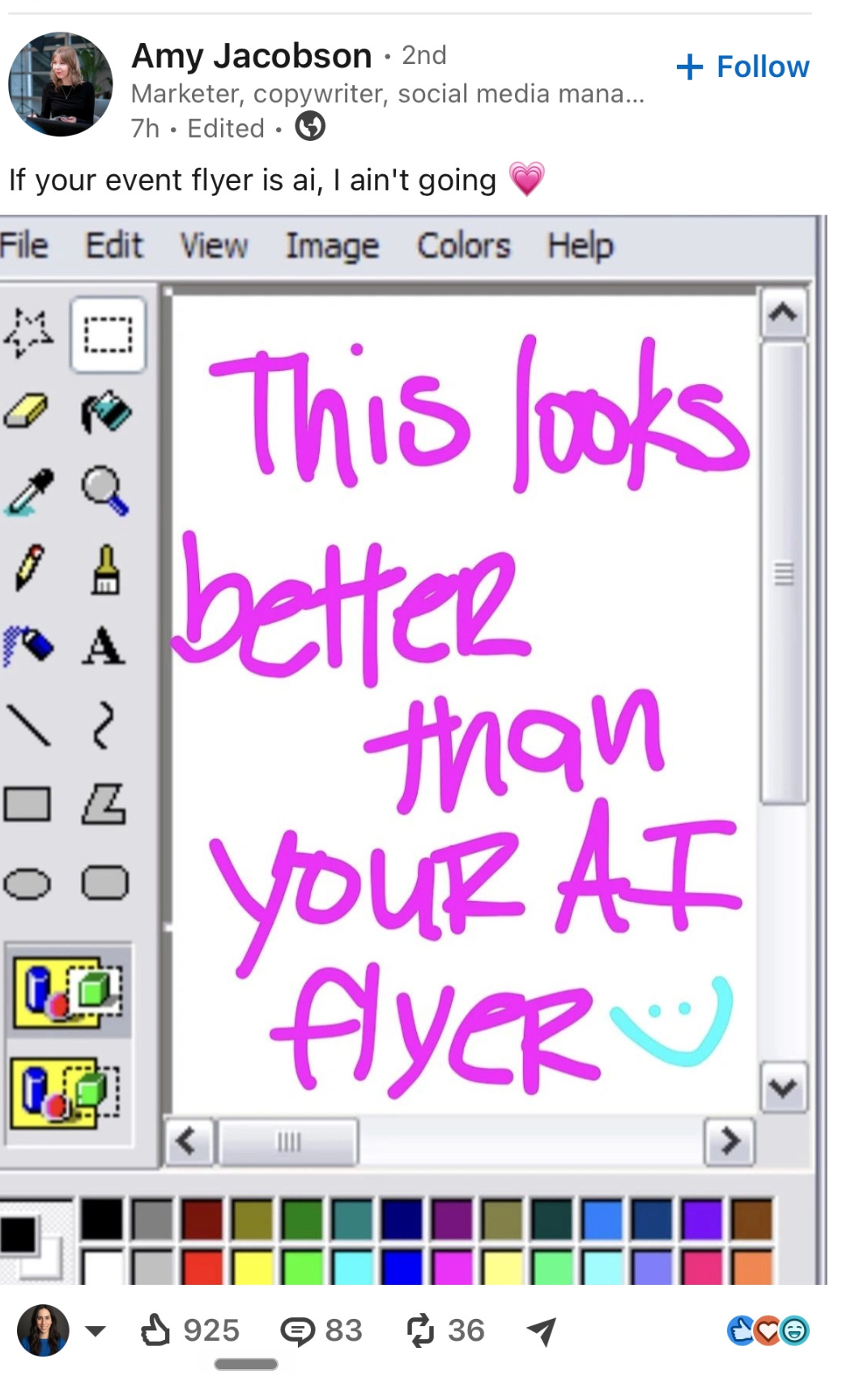
And the timing works in our favor, because starting used to be a lot more expensive than it is now. Remember Microsoft Paint? Paint was just there on the desktop. There were no rules, you’d just open it up and make ugly things. Sometimes friends would use it to make really funny pranks, but mostly we did it because it was there.
AI has now done that for starting our second acts. (People love saying “AI won’t take your job, a person using AI will.” I roll my eyes every time. The interesting part is that AI removed the friction to START.)
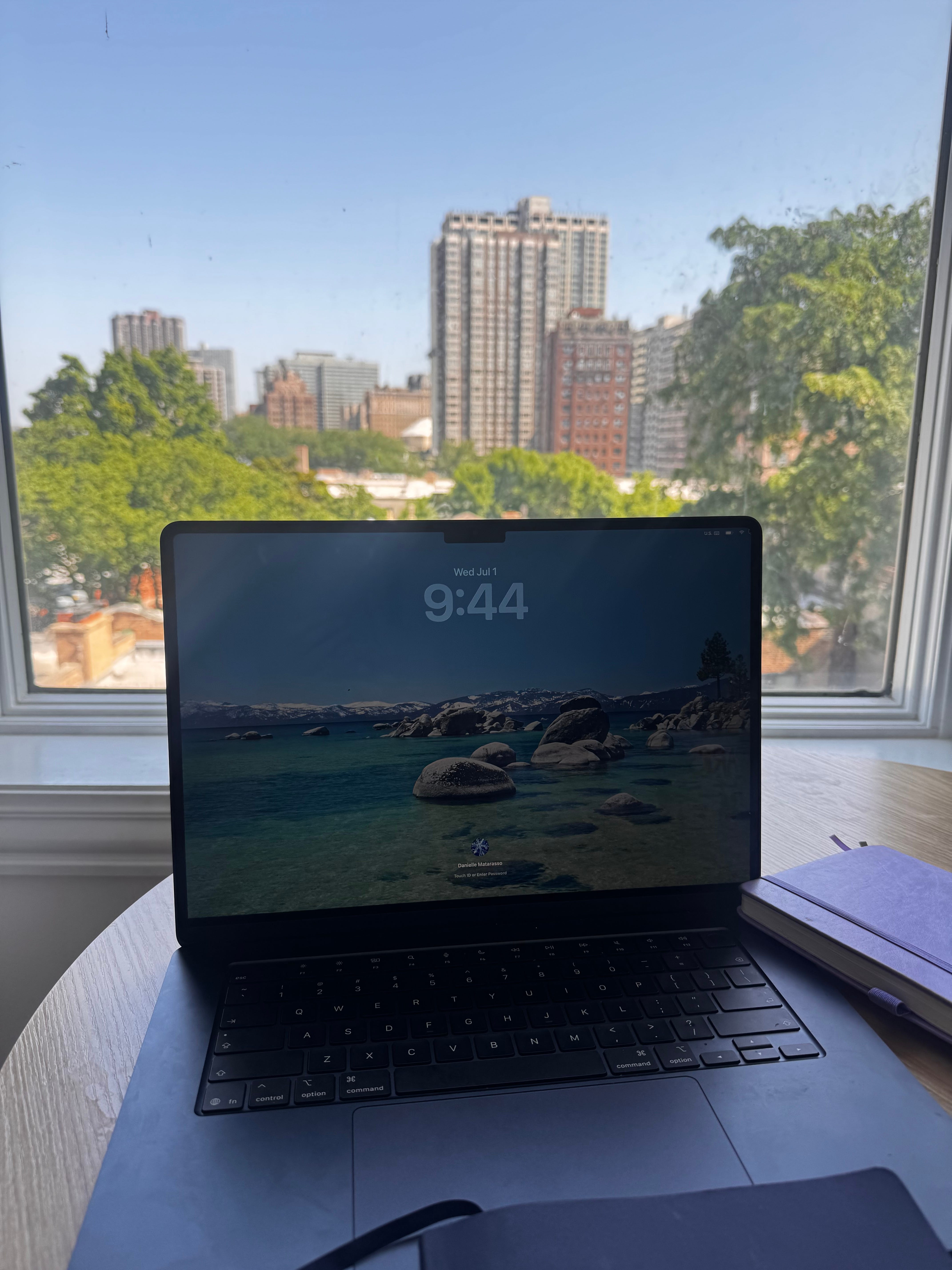
(Benefit of working for myself is full WFH flex)
First, how I got here
Two years ago May I went to my 5-year MBA reunion, and I was really nervous going in. I had just had my third kid, he was five months old. I had been promoted to VP at a tech company literally the week before. But these weren’t big, fancy names, right? I had learned a ton over those years because I actually owned a number, but I didn’t have the shiny title or company name to support it. I figured I’d spend the whole night listening to other people’s promotions and their really impressive five-year resume accomplishments.
Boy was I wrong. Person after person told me they were leaving their jobs. They wanted work that was interesting but also let them spend more time on their personal life. Some of them wanted to meet a partner. Some of them wanted to maybe try for their first kid. I drove home feeling like I had actually accomplished so much over those past few years, even though it didn’t feel that way going in. The experience I had underestimated had built a lot of really meaningful skills, while also letting me build a meaningful family life.
I think about that night a lot now that I’m building my second act.
The signs you may be ready for a change
I keep having the same conversation lately with people a couple of decades into their careers. Some are in comfortable jobs. Some already walked away, burnt out, and are figuring out how they want to come back. I’ve had every single one of these myself:
It’s 10pm, everyone’s asleep, and you’re googling businesses for sale (for those of us who didn’t hear about this in business school, it’s flooding the internet right now)
You want to build a life where wealth means more than money, it means control of your time, your health and your relationships
A friend announces their newsletter, their side hustle, or that they’re leaving corporate to build their own business, and you feel a little pang. Happy for them, and a little jealous
You keep daydreaming about your version. Mine was owning something of my own, even something tiny. Yours might be a newsletter, a small business, a practice with your name on it
You’ve told exactly one person that you want to build something of your own. Everyone else still knows the corporate version of you
You have one or two decades of experience but no one-liner yet for what you’d build with it
Your evenings are dinner, homework, and bedtime, so every plan that assumes free nights makes you laugh
Two or more? This one’s for you.
You’re allowed to find out you don’t want this
One thing before the moves, because it changes how you read them. You do not have to know if you want this yet.
You might fantasize about being on your own, writing a Substack, running a passion Instagram account, buying a small business. The fantasy version only tells you part of the story. Start building a small piece of it and you’ll know pretty quickly. Do you actually enjoy the work? Do you enjoy the lack of structure? Do you like having nobody to report to, or does that turn out to be really hard? Some people test it, learn they love the idea more than the reality, and go back to their job with a completely different level of peace. That is a GREAT outcome.
Wondering for ten years is so much heavier than testing for six weeks. Every move below works even quietly, even tiny, even on the side.
The thing we’re trying to kill here is regret.
Move 1: Take stock of the skills and network you already have
I see the proof in experience and network in the buy-a-business world. Stanford runs a study every year on people searching to buy and run small businesses, and the 2026 one shows a fast-growing share of buyers coming in after 10 to 20 years in industry. I’ve been meeting these searchers in their late 40s and 50s as I explore that space myself, and they’re some of the most focused people I talk to. They know why they’re doing it, they know exactly what kind of business they want, and they have the operating years to actually run it.
So here’s my takeaway. With one or two decades of work behind you, you’ve probably solved a lot of really interesting problems. You’ve run teams. You’ve sometimes had to own a number. And you have a real network of people who would vouch for you. But most of us, myself included, never sat down to write any of it down.
Try this: talk it out. Plop your LinkedIn or your resume into Claude and just get it all out there. Ask it to find the themes and the path you’ve actually built, then to help you identify the people worth talking to, the ones who can tell you where you’re strong and where your industry experience points. Side note - to get the list of people in your LinkedIn - export your list of contacts into a CSV and pop that into Claude. It can surface up the right people to talk to that you may not have thought of.
Move 2: Be realistic about the time you actually have right now
Every playbook I read assumed I had free evenings. I don’t. For me, the building happens in the hours between school drop-off and school pick-up. This move is a mix of finding your hours, being realistic about them, and figuring out where you can squeeze in 15 to 20 minutes to test something.
Here’s what that actually looked like for me. Before I left tech, my version was small and scheduled. I had monthly sessions with a coach, I’d allocate 30 minutes a week to the exercises that helped me figure out what I actually wanted, and an hour a week for calls with people to start exploring. Now that I’m building, I have set times in my day blocked out, and those are the only times I’m allowed to write the newsletter or create any social content, because otherwise I get distracted.
Try this: that might mean 30 minutes a week, say 4:00 to 4:30, where you start inventorying your skills and the industries you’re passionate about. Put it on the calendar and give it one job.
Move 3: Test it where nobody’s watching
You can test it first in a way where people don’t see it.
This newsletter is where I’m quietly testing things out, and it feels a lot safer than blasting things on LinkedIn (I do post there - but its different and less personal). It’s become cathartic, a place to get my experience down while I’m in the middle of the journey instead of after. Building can be lonely, and this is how I share what I’m doing with people. There’s also a reason I didn’t expect to care about so much: it’s documentation. Someday my kids can come back here and see who I was and what I was building while they were little.
I know I’m not the only one, because Substack paid subscriptions grew 67% year over year. I think part of the reason is that it’s long-form, it’s an audience you can own, and you don’t have to have people from your professional life peeking in or evaluating it until you’re ready to share. Most people aren’t looking up your name on Substack right now, and that’s a good thing, because it helps you stay a little more private while you figure out what this looks like.
I’m also doing a little bit on Instagram right now, and I really don’t like it. The only reason I’m doing it is I know I’m not a great public speaker, and it forces me to practice that skill. I really don’t know if it’s something I’ll stick with.
A friend of mine is in the middle of a move and decided to take a corporate pause, and when we caught up she told me a lot of her friends are doing something similar. I did something similar when I left tech before trying to start my own thing. I took two months off, read a ton, journaled, and tried to prioritize, and it was really helpful. What I will say is that until I actually dug in and started looking at businesses, that’s when I really started to form an opinion and understand if my why still held.
Try this: pick your lab. A newsletter, a workshop for five friends, one fractional project. Give it six weeks before you judge it.
Move 4: Just get started (ugly counts)
Back to Paint. Nobody was qualified, it was just there on the desktop, so we made ugly things and learned.
Here’s mine. In December the fear of posting on LinkedIn was very real, so I let AI write my first posts just to get me over the hump. The posts went up, nothing bad happened, and after enough reps the fear wore off. Now I write everything from scratch.
For me, building in public has opened up really interesting conversations, but I had to start. The RV guy found my content because I was posting, and a year of me quietly following him turned into an actual conversation. Another friend of mine went fractional for a while, went back into tech, is doing really well there, and she still asks, is this really it? I love that she’s being honest about that.
Try this: do one ugly thing this week. A post, a one-page website, a note or an email or a LinkedIn DM to someone you admire. Ugly and done beats perfect and drafted.
Move 5: Keep collecting, the dots connect later
If you’ve tried any of the moves above, you might already have two or three little things going that don’t obviously match. Same here. For most of this year I would have told you I was juggling three different things. An AI agency. A personal brand. A search for a business to buy. Some weeks it felt slightly unhinged. Then it clicked. AI is the thing that connects all of it. It’s helping me build my brand. It’s making my search smarter, because I’m learning which industries will or won’t get disrupted and where AI can help a business operate better. And the agency is where I’m learning how to actually put those skills to work inside a business. It all really comes together, and I get to document the whole thing in one place.
I keep seeing the pattern in other people too. A banker I met interviewed 450+ CEOs as a passion project. He built his own business before that, and he just kept the interviews going, no master plan. The network is huge, and it’s brought him some really interesting banking opportunities. He made those connections over years, and now they’re naturally starting to build out opportunities for himself and his network.
Try this: ask the three people who know your work best, “what would you come to me for?” The overlap is your answer.
Move 6: Stop building alone
Building can get lonely, and my answer is a bench. A few humans who get it, plus a small stack of AI helpers doing jobs I could never hire for this early: one agent scans trends for me, one edits my writing, one is building out my marketing and website. That used to be three separate hires, now it runs for one person with no funding.
The humans matter more though, and the ones I keep close are living proof that none of this is linear. One guy I know worked in venture capital for years, went looking for a business to buy, and ended up launching his own agency working with startups instead. He loves the work and finds real meaning in it, and he’d tell you the detour WAS the process, you test things until you find where you want to land. One of the most impressive women I know was very senior at a top-tier consulting firm and left to build a business helping women in corporate manage the mental load. Another spent years in tech and is now building a community around AI for moms while doing serious consulting work in the VC and private equity world. Second acts often flourish because of the bench you built over years.
Try this: start to list out your bench and connect with people in your network who are doing interesting things. Those on their own second acts. Set up monthly check-ins to learn, share progress, lament. Best therapy session there is.
Save this for the day you’re ready
The old deal, the one where you stayed loyal to a company and it took care of you, came apart quietly. I keep thinking we got something better in the trade: the chance to build a more meaningful life on our own terms. Remote work was a really good step in changing how we work. AI is now another step, giving us the ability to build, and even something as simple as flexible hours or working from home a little is one really tangible way to take advantage of it.
Building can be lonely, which is exactly why I’m documenting mine here, wins, setbacks, and the no’s included. Save this one, or send it to the friend who keeps telling you about the thing they want to start. And if you’re already moving, hit reply and tell me which move you’re on.
I’ll see you after carpool.
Danielle
The real advantage of mid-career isn’t just experience. It’s discernment.
AI can accelerate execution, but it can’t replace the judgment that comes from leading through difficult seasons, failed strategies, and real people. The leaders who thrive will pair curiosity with decades of hard-earned wisdom. That’s a combination worth investing in.
I feel you on this - "I’m also doing a little bit on Instagram right now, and I really don’t like it."