
What if you worked from an RV for 4 months?
A daydream about roadtripping away with my family, and what AI quietly changed about how I see work, time, and what's worth keeping.

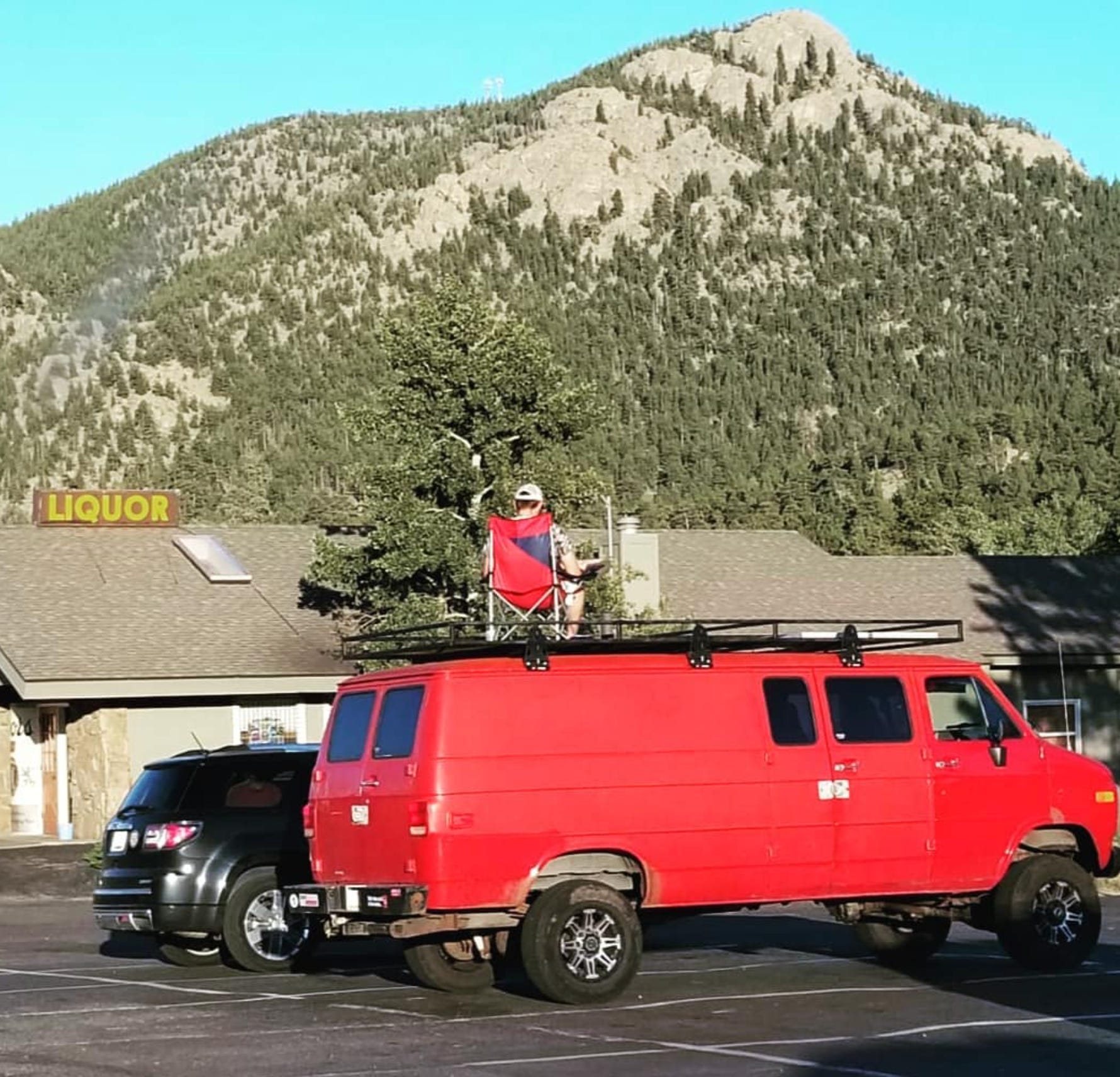
(real snapshot of an RV spotted on our Colorado roadtrip circa 2018)
The daydream I can’t shut off
My husband floated something a few months ago that I couldn’t take seriously at first. What if we rented an RV for four months and took the kids when they’re a little older? My honest first reaction was, that’s insane. How do you work like that? The kids need to be in school.
But it stuck. And then I read about this woman on someone’s Substack who basically does this for a living. She coordinates summer trips overseas, places like Spain and Italy, where the kids go to camp during US working hours, surrounded by kids from all over the world, this whole multicultural thing, and you get to actually be in Italy while you work. I read it twice. It pulled me right back to our honeymoon, this unbelievable little winery we still talk about (keep reading for pic of said winery).
A few weeks ago I watched a pile of kids (mine + a family friends) on a beach, all different ages, no devices anywhere, just figure out how to play for hours. Sand, water, each other. Bored enough to get interesting. And I thought, that. I want more of that. Maybe the whole point was never more stuff. Maybe it’s more of that.
I did not expect a half-baked RV fantasy to crash straight into what I do for work. But it did, on a run, with no headphones.
What I actually think about on a run
I’ve been trying to get outside once a week this summer, Saturday afternoons, a (slow) run. Chicago in the summer is just too good to waste and I live by the water. I almost always have music on when I work out, usually at the gym. But this time my airpods were out of battery and I didn’t have time to wait for them to charge. The run was during nap time (IYKYK). This was the third time I ran (clearly a professional here), and it turns out my brain does something different when the music isn’t blasting.
This time my mind kept landing on company loyalty, of all things. Super interesting, I know. A friend brought it up the week before and clearly it stuck without me realizing. Think about our parents’ generation. You picked a company, you were loyal to it, and it was loyal back. You stayed twenty, thirty years and it took care of you. That deal has been quietly coming apart for a while now. Not many people we know stick around long (unless it’s law, consulting). And the faster AI changes which skills matter and how the work actually gets done, the less of that loyalty is left, both for us the employees, and the employers.
So here’s the question I ran the rest of the way home with. If the company and/or career path isn’t the thing you build your life around anymore, then what is?
Company and career loyalty isn't coming back. So what are you actually building on?
Something is making me a little worried
Here’s what really gets to me. I think about people a bit more senior, especially in tech, who are out there bouncing between roles, chasing the next big senior title or the exit to their name. And I wonder what happens to them if the ground keeps moving this fast. The exit doesn’t come. The title stays stagnant.
I’ll be honest, I feel a little compromised even thinking about it, because I’ve sat in that exact spot. Maybe the real move now is to learn how to own something yourself. Something small, even. To get uncomfortable, to have to sell, to hear no (I got a few no’s this week and it was HUMBLING to say the least). I am not saying this because I think it’s safer. It’s more that the old system, the one where you stayed loyal and it caught you when you fell, isn’t there to catch anyone anymore.
We automated our bodies. Now we’re automating our minds.
A generation ago, we automated our bodies. The cars, the desk jobs, the washing machine. Our muscles got soft, so at some point we invented the gym and started moving on purpose. Nobody’s grandfather ever said “I think I’ll go work out.” They just naturally moved. Kind of like those centenarians living in Greece, or Italy, always on the move. Now everybody “has to work out.” Me included. 5x a week.
We’re doing the exact same thing to our minds right now. We used to use our intelligence to build technology. Now we feed these models everything we’ve ever written and they hand the intelligence back to us. The smartest-person-in-the-room thing we all chased? That’s the part getting cheap. Sam Altman literally talks about buying intelligence “on a meter, like electricity.” That’s wild.
We automated our bodies. Now we’re automating our minds.
So if the gym was our answer for our bodies, what’s the gym for our minds? Hold that thought. I come back to it.
The three months I wish I’d had AI for
When I went into tech, I owned the number. That was the biggest shift of my whole career, going from running the analysis for other people to being the one actually on the hook for the result. And I missed, more than once.
But owning a number comes with a mountain of analytical and busy work. I once spent three months trying to figure out which market we should go into. THREE. The TAM, the analysis, pulling numbers, half of which turned out to be wrong. Today, I could do that in a couple of days, at most. My team used to fight with HubSpot just to get their deals recorded right. Now, with voice notes and dictation and automatic follow-ups, it’s almost nothing.
I think about this all the time. If I’d had even two years ago what I have now, how much faster I could have moved, how much more I could have sold, and how much I could have helped my own team level up instead of drowning in spreadsheets and too many systems to count.
That shift is important. Because AI is eating the busy work part and it leaves the meaningful (and interesting) work for us.
The two skills I’d bet on
Here are the two that are really going to matter, no matter what this turns into:
Judgment
Taste
You have to know what actually matters. AI will give you a hundred options, and some of them are just completely bogus. I can’t even tell you how many times AI told me to do one thing and then the next chat told me to do the complete opposite. It’s on you to figure out which one is right, and that is not a skill that’s going anywhere. AI can do the analysis in minutes. It still can’t tell you which answer is right.
So what’s the gym for your mind?
Remember that question I parked? Here’s where I’ve landed.
I played Mahjong for the first time recently. I figured the whole appeal was the mental workout, all the pattern-matching. It’s not, or it’s not only that. It’s four people at a table, phones face down, actually together for two hours (well, only that long because they had to teach me). Searches for Mahjong clubs are up something like 4,000 percent in the last year. There’s a reason.
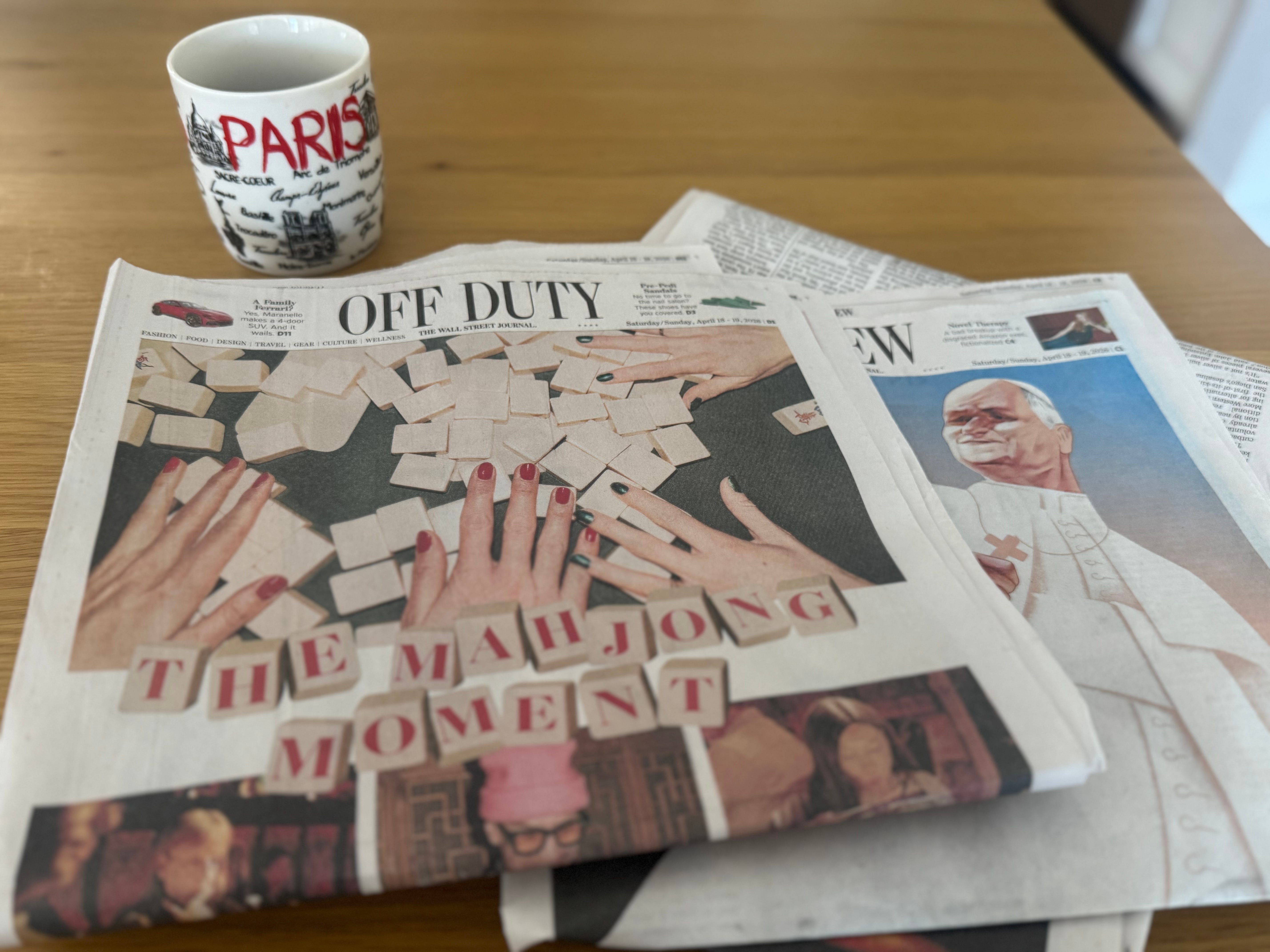
That’s the gym. Not just for your brain, for the human part. The real conversation with the awkward pauses. The game with no screen on the table. The people who actually know you, or are getting to know you.
And it matters more now because of this. There’s a tool out right now that builds a full talking video of you, your face, your voice, your hands, from fifteen seconds of footage. Thirty million people already use it. Most of the Fortune 100 too. Someone could be me on camera by the time you finish this email. It can fake almost anything now. The one thing it can’t make up is time.
It can copy my face in fifteen seconds. It can’t copy fifteen years of experience.
My friend who figured it out
I keep coming back to a friend of mine. Really sharp, took a new job a few months ago. Four months ago she wasn’t into AI at all. Now the thing she’s most excited about is that she finally gets to do the meaningful part of her job. The real conversations with candidates, the actual judgment calls. And she lets Claude do all the analysis that used to take her weeks to do - in just minutes now.
And it’s not just her. PwC’s 2026 jobs report found the roles built on human judgment are growing about twice as fast, with pay climbing faster too. The deciding is the part that will pay the bills going forward.
The fifteen-minute thing I’d actually do this week
Want to see this for yourself? Try this.
Open ChatGPT or Claude (if you know me, you know Claude is my go-to). Don’t sit there typing. Open a voice note and just brain dump everything you did this week, the good and the bad, out loud. Then ask it to sort it all into two columns:
The stuff a machine can do quickly and cheaply
The stuff that needs your judgment and taste, the things only you can do
Then ask it the real question. How can I use AI to do more of column one, so I can spend more of my time on column two?
Here’s what mine looked like:
Column one: I had Claude build out a whole go-to-market sourcing model. Who my leads are, how and when to reach out, managing the database in Notion, even drafting some of the outreach. I also built an AI Chief of Staff to feed me a prioritized list each morning based on my calendar, emails and voice dump from the night before.
Column two: the stuff that’s actually mine. Building out the systems for my clients, and a lot more live conversations and outreach, the kind where taste is the whole thing.
When I saw it laid out like that, column two was full of the parts of my work I actually love.
Where it’s all colliding for me
Okay, back to that RV daydream I opened with. Here’s why it won’t leave me alone.
Work changed with remote. Education might be changing too. Company loyalty is gone. AI is eating the busy work. And I keep wondering, is there actually a world now where we get to live a little more fluidly? The RV. The summer where the kids are at camp in Italy during my work hours and we actually get to be there. The honeymoon winery, except this time with our kids in the back seat.
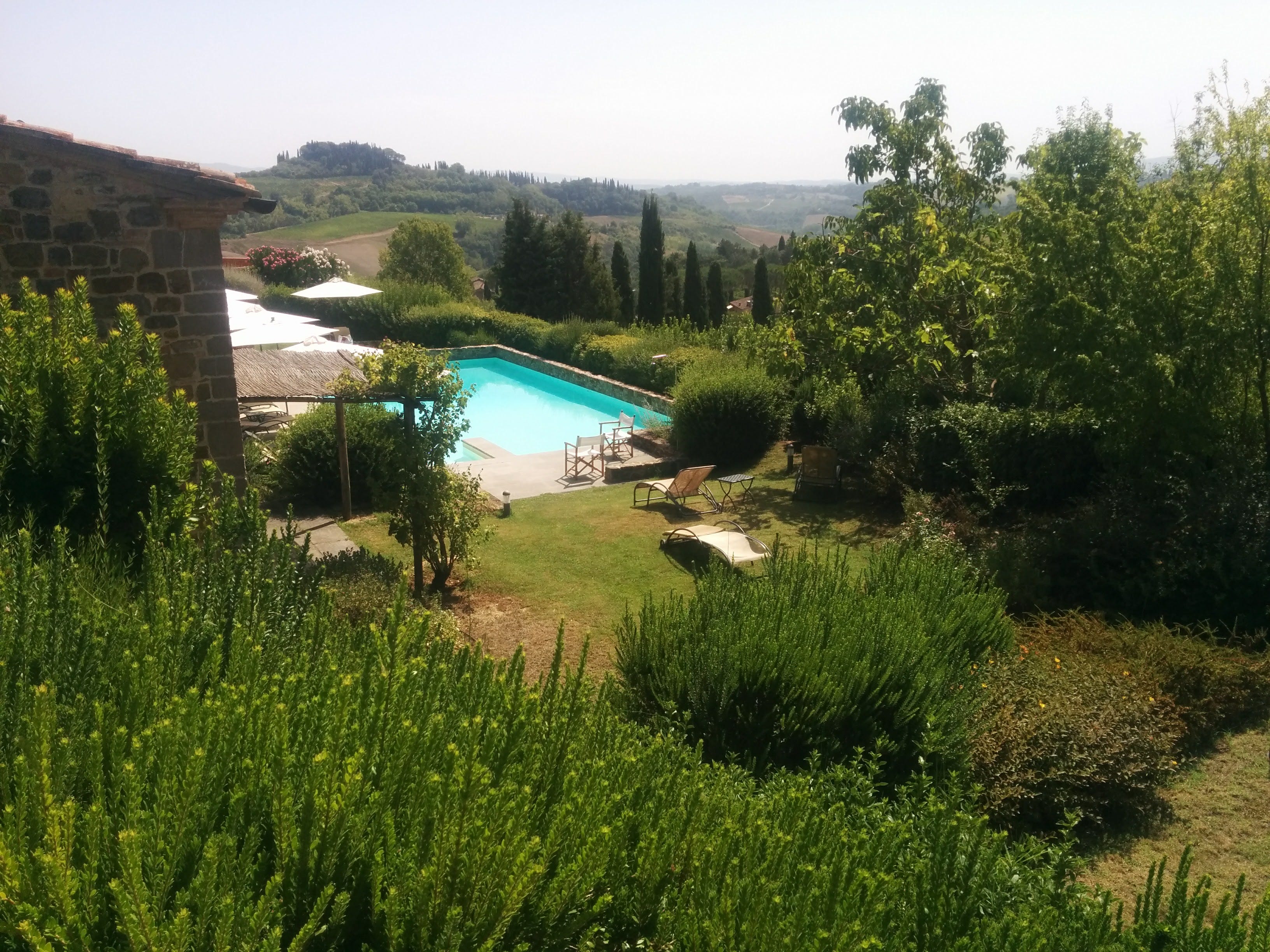
(actual winery circa 2017 that may be our inspiration for a future Italian summer?)
As everything else gets cheaper and faster and easier to fake, the things that take real time are the ones about to be worth the most. The long (and sometimes boring) marriage. The friendships (some stay, some leave, some come back). The trip you keep saying you'll take. We keep thinking the flex is more, the bigger house, the nicer car. I'm starting to think the flex is wanting less of that, and a lot more of this. Real, in person experience.
The flex isn’t more stuff. It’s wanting less of that, and a lot more real experiences.
So this week, a couple of things. Do that two-column voice note, it’s the fastest way I know to stop feeling vaguely doomed and start seeing your own work clearly. Then take it home. Have your partner do it too, and compare. And ask the bigger one, the question I keep asking at my own kitchen table. In a world where almost everything can be faked or sped up or bought on a meter, what’s worth protecting because it takes time? Then actually put one of those things on the calendar. Not someday. This week.
And if you feel that same itch I do, the slightly worried one, sit with this too. What would it look like to own something of your own, even something tiny, before the ground shifts again?
You’re already paying attention, which honestly is most of the job.
I’ll see you after carpool.
Danielle
I think this book is the first thing I ever bought on Amazon. Maybe 1999? (I checked and my history only goes back to 2008.)
https://meganedwards.com/roads-ashes-odyssey-real-life-virtual-frontier/
It captured the same vibe your post here does but in the earliest days of the internet.
I’ve been doing my own thing 16 years now because I couldn’t stand being in an office 48 hours a week. I often think maybe the rest of the world is finally catching up.