
They Didn't Wish They'd Waited. They Wished They'd Started.
The wisest Americans were asked what they'd do differently. The answer was almost never a credential.

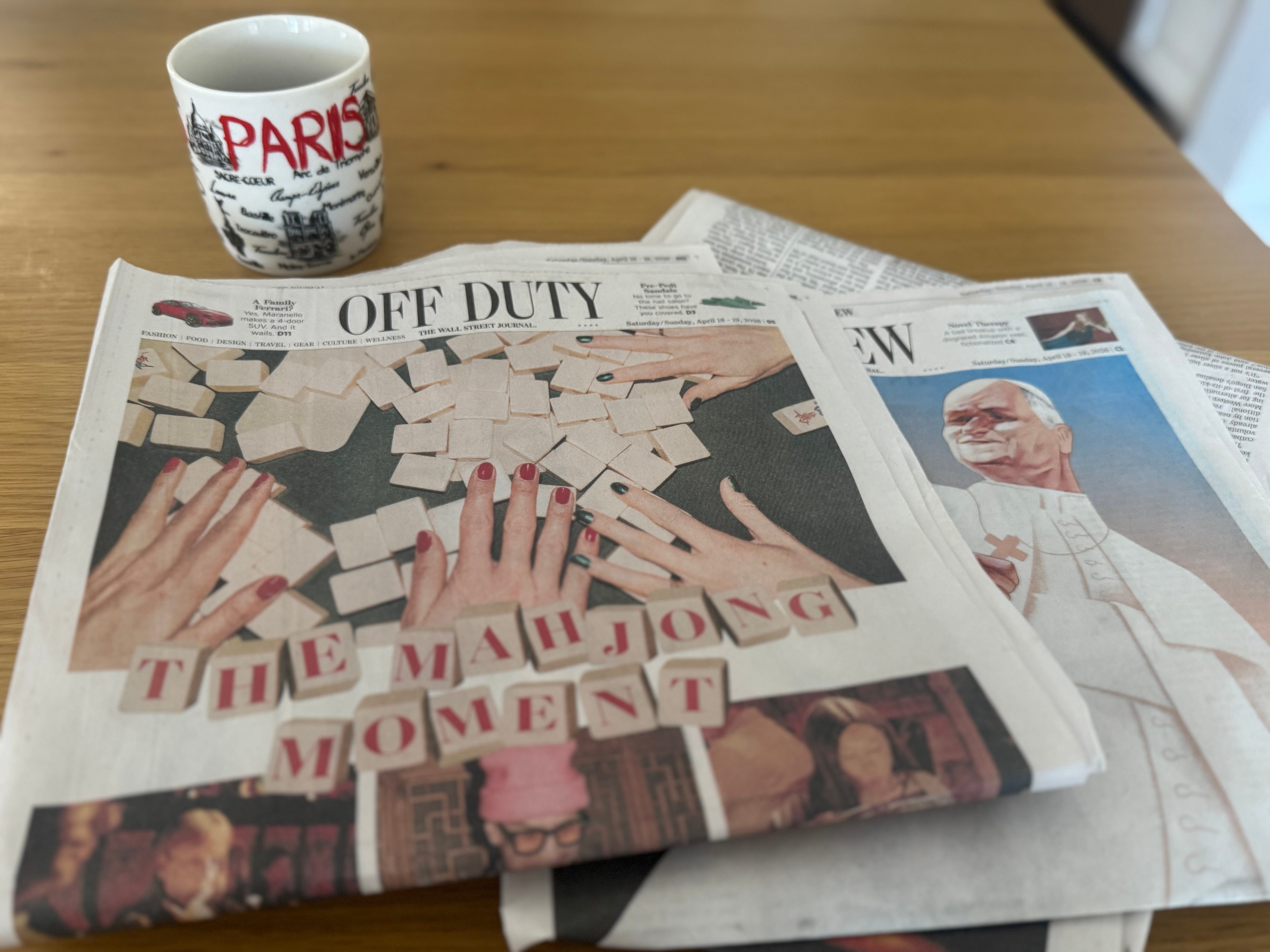
I did not look at my phone Saturday morning.
My older kids were already up when I found them hanging out on the couch. We made breakfast together, and then I did something I almost talked myself out of: I pulled out a week old newspaper since this weeks edition never arrived for some reason.
I’d been about to throw it out, but the Apple and Intel deal in the edition was one I hadn’t heard about and was still relevant. The piece about how China’s relationship with the West is changing was still worth knowing. So I sat down at the kitchen table and read it while my kids ate.
Nothing urgent. Nothing demanding a reaction. Just things worth knowing, at whatever pace I chose to read them.
I only looked at my phone an hour and fifteen minutes after I woke up.
And I was more myself by the time I did.
It sounds small. It wasn’t. There’s something I’ve been testing this week: no phone for the first hour after I wake up, no phone for the hour before I go to bed. And at night, before I close my eyes, I write down three gains from the day and three priorities for tomorrow. Not a to-do list. An anchor. A way to stay connected to why I’m actually doing this.
For the first time in longer than I can remember, I’m not dreading Monday. More on that in a minute.
What the elders actually say
Years ago I read a book called 30 Lessons for Living. It’s built on hundreds of interviews with the oldest Americans, people in their eighties, nineties, and beyond, asking what they wish they’d known, what they’d do differently, what actually mattered.
I’ve been thinking a lot about those lessons lately. Something is finally clicking that I couldn’t see before.
The answer was almost never a credential. Almost never a title. Almost always, it came back to two things: how they spent their time, and whether they let themselves do the thing that lit them up, or kept waiting for the right moment to start.
They wanted less. And they cared far more about where their time actually went.
For a long time, I thought this was a little fluffy. Not realistic. “Do what you love” sounds great until you’re trying to build an actual life, pay for things, take care of people who depend on you. Passion doesn’t automatically pay. I knew that.
I’ve been rethinking that though, lately. With AI, the gap between what you’re genuinely good at and what you can actually monetize just got a lot smaller. The things that used to feel like hobbies, things that couldn’t pay the bills or buy back your time, they’re becoming real options now. Not because AI is magic. Because it removes the overhead that was always the barrier between the thing you loved and the income you needed.
A friend of mine recently asked, in a joking sort of way, how can she make money on social media through her passion for cooking. What once felt like a dream can now be reality.
The elders had the wisdom. Now we might actually have the tools.
What I actually built last week
About those Mondays. A few months ago, the consulting work finally clicked into place. And this newsletter became the thing I actually wanted to build alongside it, a way to take what I’m learning and bring it to the people in my world. The two started feeding each other instead of competing for the same hours. Sunday nights feel different. And Mondays feel different too. Not something to get through. Something I’m actually looking forward to. For the first time ever.
I want to get specific here, because this whole conversation needs to stop being theoretical at some point.
Last week I built two websites. For work. Start to finish.
No design agency. No design firm. No waiting weeks for someone to interpret what was in my head and come back with three options I sort of liked.
I used Claude Cowork with Claude Design to develop the visual direction, giving it examples of brands I loved and describing in plain language what I wanted the sites to feel like. Then I built the actual sites in Lovable, which is an app where you describe what you want and it builds it in real time. I said things like:
“I want dropdown buttons here.” “Make this section bolder.” “I want this layout vertical, not horizontal.”
That was the whole thing. Me, describing what I wanted, watching it appear.
From first idea to a live site: fifteen to twenty minutes. Twice.
The skill that made the sites good wasn’t technical. It was taste. Context. Knowing what I wanted the site to communicate and who it was for. Claude and Lovable were the executors. I was the creative director. The thing I brought that no tool could replace was my own judgment about what was right.
That is exactly what the economy is rewarding right now. And if you want to know where your specific skills fit in that economy, you don’t have to wait for someone to tell you. You can find out yourself.
The quiet career scan
Three people reached out to me this week. One asking how to start making money from the thing she does for free. One wanting someone to walk her through AI for work, the way a friend would over coffee. A third with a message I’ve been getting in variations for months: “I know I should be paying attention to this, but I don’t know where to start.”
All three of them are asking the same question: is there a version of the thing I’ve been wanting to do that this actually makes possible now?
Most of us don’t realize this is available to us. We don’t have to be actively job searching to understand our market. We can scan it quietly, stay informed, know our options, without committing to a single thing.
Bloomberg published a CEO survey this week. More than 40% of CEOs are cutting junior roles and moving toward senior workers. The reason: AI handles the entry-level output now. What it doesn’t handle is the call you make correctly because you’ve made it wrong before and learned. The relationship that opened a door no algorithm knew about.
Your title is one data point. What you can actually DO is the asset, and right now that asset is more portable than it has ever been.
Run this in ChatGPT today:
“I’m a [your role] in [your industry]. Without actively job searching, what would a quiet market scan look like for someone in my position? What industries value my skills outside my current one? What kinds of roles are growing that use what I’m already good at? Give me 3 specific moves I could make in the next 30 days just to understand my options, not to change anything.”
You’re not looking. You’re informed. There’s a real difference.
Level-up: Set this up as a standing weekly brief:
“Act as my career intelligence agent. Each week, give me a 5-bullet brief: one trend in my industry I should know, one adjacent field gaining traction for people with my skills, one role type in demand I’d be qualified for, and one thing happening in my field right now I should be aware of. My field is [X], my level is [Y], my key skills are [Z].”
I have a friend who works in HR consulting. I ran this prompt to test out what opportunities could look like for someone in that world. What I got back surprised me, in a really good way.
I’m also working on a dedicated version of this for you, a tool that runs this scan automatically twice a week so the job opportunities come to you without any searching. More on that very soon.
All of this, the websites, the career scan, the Monday mornings I actually look forward to, it’s only possible if you’re telling yourself the right story about what AI actually is. And right now, most people aren’t.
The story we’ve been told about AI is wrong. Sort Of.
I’ve been watching graduation speeches this week. Students booing every time someone mentions AI on stage. I completely understand it. Something is arriving that nobody asked permission for, and that’s unsettling.
But I saw a clip where someone said something that’s been with me since.
“It’s not going to replace you. It’s just going to change how human strengths are used.”
That is the whole thing.
The story most people are telling about AI is about what it takes away. There is truth to this, but its only part of the story.
I built two websites last week using my own taste and plain language. The agency model I used to need is gone. The design firm I used to have to hire is gone. What’s left is the question of what you actually want to build, and whether you’re willing to try.
For the first time in most of our lifetimes, the friction of starting something has dropped to almost nothing. You don’t need a studio. You don’t need to finish a course first. You don’t need three free hours on a Saturday that never actually come. You need thirty minutes and the smallest possible version of the thing you’ve been telling yourself you’ll start when the timing is better.
The timing is not going to get better. You already know this.
Run this:
“I’ve been telling myself I want to [your thing] but I never start because [your reason, no time, not sure it’s worth it, don’t know where to begin]. Design the absolute minimum version I could try this week. Under 30 minutes. No setup. No commitment. Just the thing that would tell me if this is real or just a fantasy.”
Then do exactly that thing. Nothing more.
I tested this prompt out by naming my desire to help more parents use AI. A lot of the feedback I received tracked with what I am currently testing out.
One last thing
The elders in that book aren’t warning us. They’re not lecturing. They’re just telling us, clearly and without decoration, what they wish they’d understood sooner.
They didn’t wish they had waited for better timing. They didn’t wish they’d been more careful about the thing that lit them up. They didn’t wish they made more money.
They wished they had started.
You still can.
One question for tonight at the table: what's the one thing your 90-year-old self will wish you had started this week?
Ask the kids first, if they are older. Sometimes the thing they name out loud is the thing you’ve been quietly carrying yourself.
I’ll see you after carpool. Danielle
Danielle
"The answer was almost never a credential. Almost never a title. Almost always, it came back to two things: how they spent their time, and whether they let themselves do the thing that lit them up, or kept waiting for the right moment to start."
Really hitting home!
That WSJ edition in the photo has a great piece on the explosion of mahjong among young people…. I think that also ties into what you just wrote about: it’s a way for people to connect IRL without technology and spend their time more meaningfully with each other.