
The Future-Self Filter: 6 Questions to Ask Before Your Next Big Pivot
How to tell real progress from just being busy. And how to fix that.

Last week I told you about almost buying the wrong business. This week I want to go a bit deeper and give some context on a deeper symptom that was driving part of that. It’s THE lesson that is putting me on track finally, a year later, after leaving tech.
The Year I Went in Circles
For a good part of the past year I spent a lot of it going in circles. It’s not fun to admit it, but it’s true, and it taught me some very valuable lessons that I believe will catapult me forward. For me. Last year and into the start of this year, I told myself I was making progress, because I was busy. I was researching, taking calls, reading everything, looking at deals. But I spent months looking at the wrong kind of business, and even longer going back and forth on whether I wanted to buy something or build something from scratch. I’m still on that path. The difference now is that it’s finally getting clearer, and I very recently put my finger on why.
For most of that year, I wasn’t anchored to anything. For someone who spent 5+ years in tech anchored to scorecards, KPIs, OKRs, EOS rocks (IYKYK), these new waters were unsettling. I was reacting to whatever was loudest that week, saying yes to too many things, and getting pulled in five directions at once. Now that has changed, and it’s not like I magically got more willpower or “figured it out”.
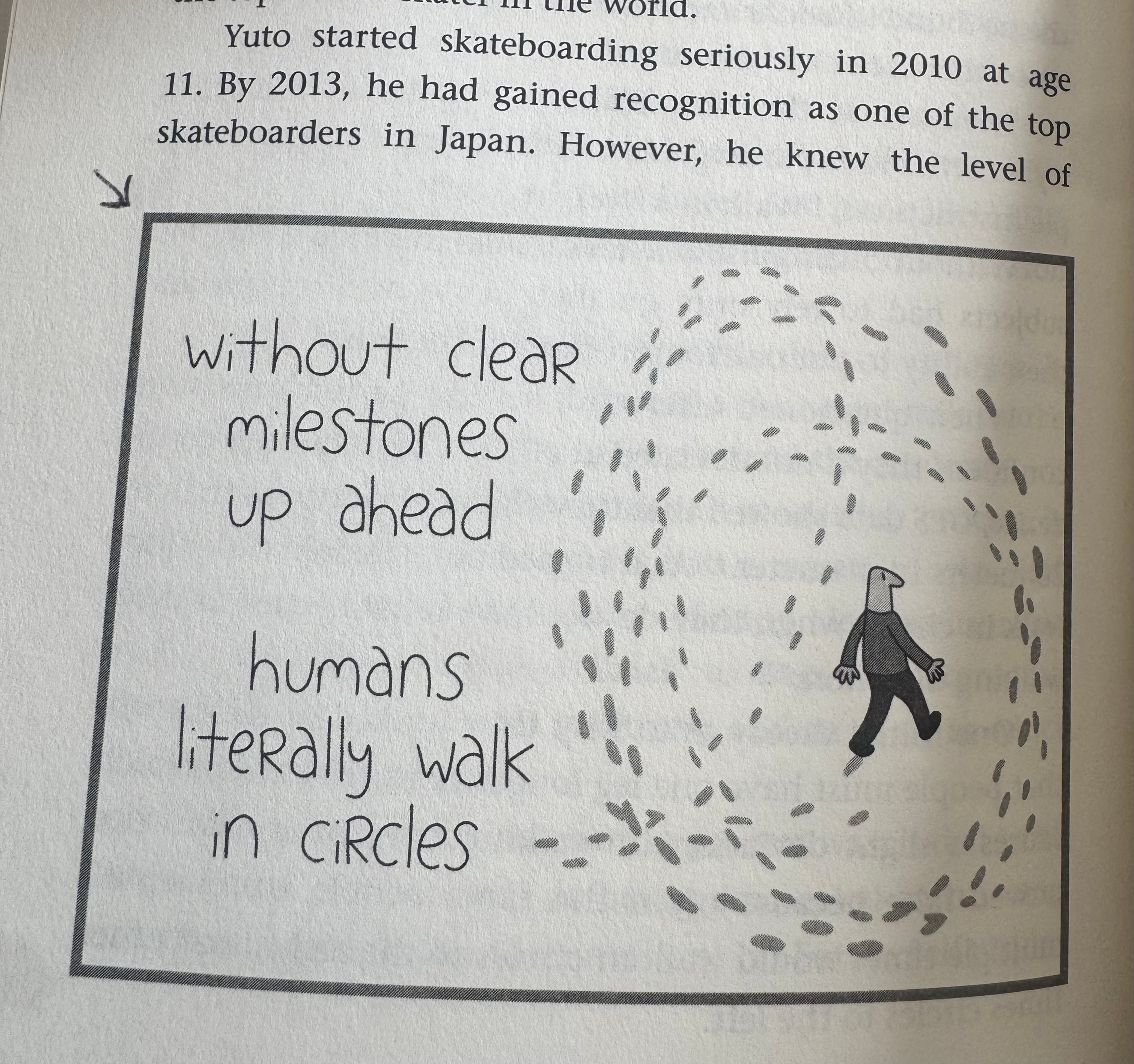
What happened is that I have gotten specific about my future self. Like mapping out the actual person I’m trying to become, and I’m letting her decide what gets my attention. Benjamin Hardy calls this being your future self now, and the core idea is simple but not easy: your future is supposed to drive your present, not the other way around. When you lose sight of the person you’re becoming (or trying to become in my case), every decision turns short-term and scattered. And then you do what I did - circle.
Without a goal, you don’t stop. You circle.
(Source from Be Your Future Self Now by Dr. Benjamin Hardy - highly recommend).
Starting Got Easy. Focusing Didn’t.
Having goals matters more than ever now - and I hate to say it, but that is in part because of AI. Building has never been easier. I can open Claude and have a plan, a draft, a website in about 15 minutes. Trust me - I built a new website from scratch last week, it really only took me that long. When starting is basically free, starting is no longer enough to set us apart (to be clear - I still VERY much believe in starting over not starting).
Knowing what you’re building toward is what carries weight. For me, I came to realize that my why, my goal, is the fear of regret, in a lot of ways. Regret to never try building something of my own because I decided to stay somewhere that felt safe. That fear is why I left my job. It’s also why I can catch myself now when I’m consuming instead of deciding, three podcasts deep on how to buy a business, another book, another research rabbit hole, all of it feeling like progress while I put off the actual choice. To try the hard thing that doesn’t pay off today.
The Six-Question Filter
What I want to share with you today is the framework that I use (borrowed from Benjamin Hardy’s book - which I highly recommend you read). It is a set of 6 questions that helped me figure out what I want my future self to be, distill it down to 3 priorities, followed by clear actions I can take over the next 12 months to get there. I call it my Future-Self Filter (borrowing from Hardy’s Future Self concept), and it’s the lens I now use any time I say yes to something. That yes may be a new client, a digital course to “learn more”, listening to one more podcast.
Here’s the whole thing in one place. Save this one, and come back to it before your next big yes:
The Future-Self Filter
The Priority Question - Who do I want to be, and what few things get me there?
The Weed Test - What am I saying yes to that my future self would drop?
The Busy Trap - Does this move me toward her, or just keep me busy?
The Ask - Am I asking for what I want, out loud?
Build vs. Watch - Am I building something real, or watching other people build?
Decided or Hoping - Have I decided this is mine, or am I still hoping?
I pulled them from Hardy’s framework, which he actually splits into things to do and traps to avoid, and I kept the six that were key for me. They don’t take long to answer, but I do recommend spending some time with each question. Journaling, writing down points that come to mind. Think of it as six ways to figure out what actually is worth your time. Because time is the one asset you can’t buy back. It’s the most sacred thing we have.
Here they are again, with the raw version of how I’ve been using them, so you can get some context on how it is helping me on this journey.
1. The Priority Question: Who do I actually want to be, and what are the few things that get me there?
(Hardy’s first move: get specific about your future self and your handful of 10x priorities.)
For me the honest answer is my family, my health, and growing businesses for the long term. What I knew was that I wanted to be intentional about carving out meaningful time with my family (including extended family who mostly live abroad), making space for my mental and physical health. And most challenging, realizing that I want to grow businesses for the long term, which means it can be either through building or buying. But recognizing that long term is the goal is what shapes the path.
Naming the few things that actually matter is what makes every question after this one easier. It’s the lens I apply now to how I spend my time, down to something as boring as weekends.
2. The Weed Test: What am I saying yes to that my future self would drop?
(Hardy calls lesser goals the weeds in the garden. They choke the thing you actually planted.)
This is the one I struggle with the most. It is so easy to take on another piece of fractional work or one more client, and the money is real, so it feels responsible. And it’s immediate. But if I’m honest, more of that is not the best use of me right now, not when there’s a bigger picture I’m trying to build. Choosing the craft over the easy option is not comfortable. It’s just the aligned call, and I have to make it on purpose. What helps me is thinking about work as the craft, not just a job. If an action or commitment helps me improve the craft, then it is worth my time. If it doesn’t and it conflicts with my priorities, then it doesn’t deserve my time.
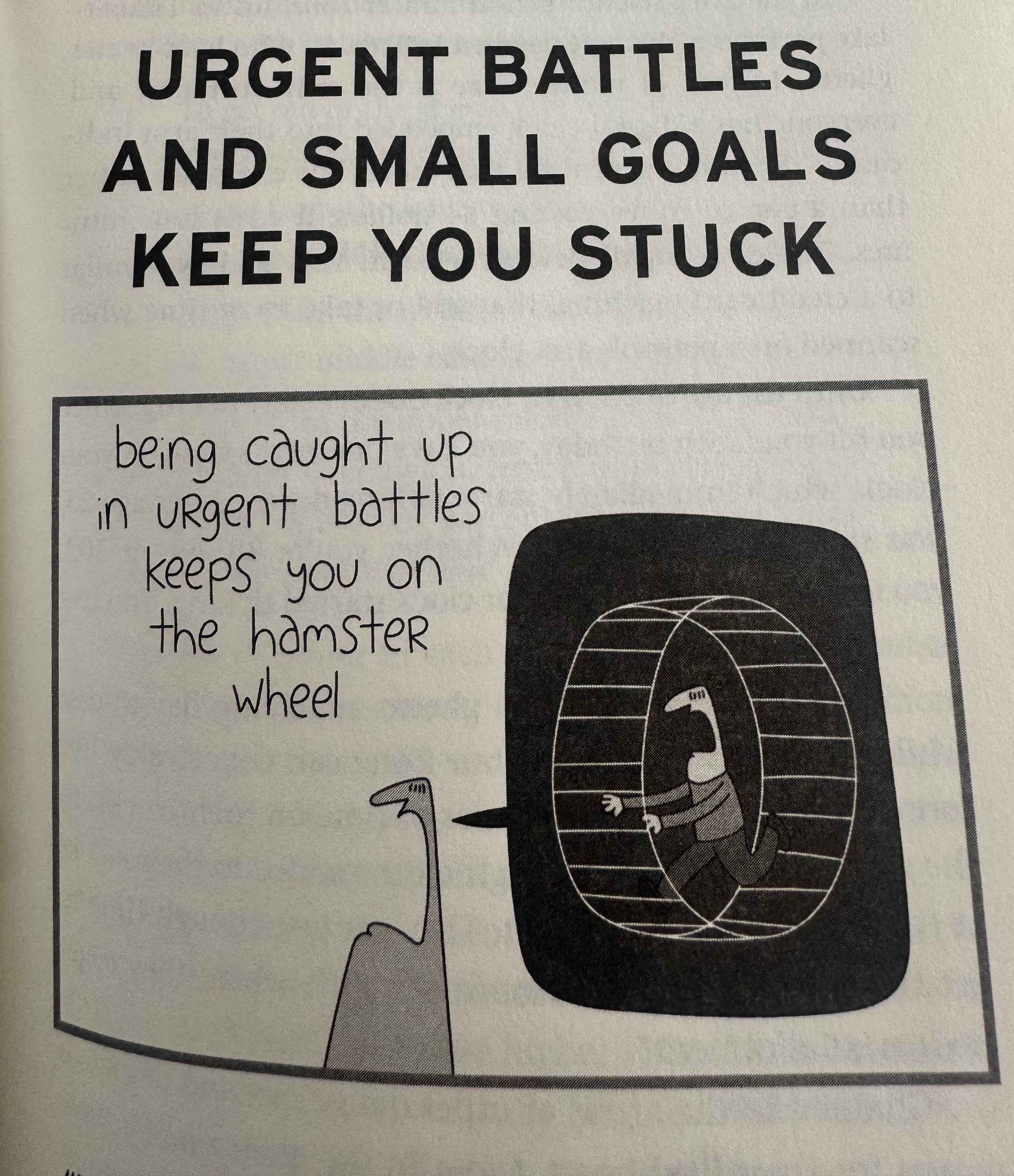
3. The Busy Trap: Does this move me toward future me, or just keep me busy?
(Hardy’s rule: important before urgent. The trap he names is letting small, urgent goals run the whole day.)
Busy is progress’s best disguise. For a while I was pushing hard on Instagram, telling myself it was how I’d get into public speaking. It wasn’t aligned, and it wasn’t even the right room for me. What actually worked looked completely different: I’ve been on four podcasts in the last two months, and I enjoy it more than anything I forced. There are many paths to the same goal, and part of this filter is noticing when you’re grinding on a busy one instead of a real one.
(Source from Be Your Future Self Now by Dr. Benjamin Hardy - highly recommend).
4. The Ask: Am I asking for what I want, out loud?
(This is one of Hardy’s seven steps, and it’s the one most of us skip, myself included.)
This is where the arena stops being a metaphor. I started something I call my 100-person list, reaching out to more than a hundred people over a couple of months, people I’ve never met and people I hadn’t talked to in years. Plenty of it goes nowhere. I also take the calls and make the introductions when there’s nothing in it for me, because being in the arena matters. And really, paying it forward is just the right thing to do. Gary Vaynerchuk has a line that I love - that you should attach your confidence to your intentions, not your abilities or your results. Asking out loud is uncomfortable every single time, but those real conversations have been more meaningful for me than anything I’ve ever consumed.
5. Build vs. Watch: Am I building something real, or just watching other people build?
(Hardy is blunt here: not being in the arena is failing by default. The fix is to ship imperfect work.)
For a long time I watched other people document what they were doing and felt real awe at the guts it took to be that public. Then it clicked that the watching was the problem. I was deep in the Acquiring Minds podcast while I hunted for a business, stacks of books, endless research, all of it real information but no action. Making something that can actually fail or be judged, writing this newsletter, building the workflows, is the arena.
And the odds of succeeding are shifting toward the builder: so much of what’s online now is machine-made, a majority of long-form LinkedIn posts by recent estimates, that a real person who shows you what they actually built has become rare and worth trusting. As Hardy puts it, the longer you wait to enter your arena, the more you limit your future self. So I am applying this concept by focusing on bias towards action - getting out there, doing the thing, failing, getting back up and improving on the next round.
6. Decided or Hoping: Have I decided this is mine, or am I still hoping?
(Hardy’s progression: you move from needing, to wanting, to knowing. Knowing is when you act like it’s already yours.)
For most of last year, I was hoping. I wanted the future self but wasn’t sure what that should look like. I hadn’t truly sat down to think about my priorities and how to align them with my actions. So I stayed busy and sometimes unfocused and, yes, going in circles. Now I have actual goals I can march toward and something to hold myself accountable to, and the difference in how I make decisions is night and day. This is the turn from wishing your future self into existence to simply being her.
Try This Before Your Next Big Move
So here’s the one thing to try this week. If you are trying to figure out a big decision, or want to test out what your future self could look like, walk it through the six questions. What you should come out with is 3 priorities and tangible ways to achieve them in the next 12 months. Hardy’s full framework is more in depth, and if you do have the time for 14 questions, then its worth the time. If not, stick with the 6 I highlighted.
If you want to go a layer deeper, paste this into Claude and let it interview you (using Wisrp Flo/talking):
“Interview me as my 20-year-from-now self who is living the life I actually want. Ask me the six questions one at a time (priorities, what to drop, busy vs. aligned, what I’m not asking for, building vs. consuming, deciding vs. hoping), then tell me what that version of me would choose about [your decision], and why.”
A Few Steps Ahead, Not Above
If you’ve read this far, you probably found yourself somewhere in here, the circling, the busy that felt like progress, the research that was really avoidance. I’m not muhc further ahead. As I am writing this, it is from about a step ahead, still catching myself, still running my own filter most weeks. The fact that you’re thinking about the person you’re becoming at all means you’re already doing the part that compounds.
I’m working on the deeper version of this, the actual planning system behind these six questions, the monthly and yearly setup with a two-minute daily check-in that turns them from a gut-check into something that builds over time. The filter helps you find your priorities while the system helps you keep them. If anyone knows me, they know I love a good habit stack. Stay tuned for the guide.
I’ll see you after carpool.
Danielle
Questions 4, 5, and 6 - so good