
My kids handled the chaos better than I did
We planned for a bonfire and a lake. We got six kids, a foosball table, and a lot of rain. Turns out that was the part that mattered.

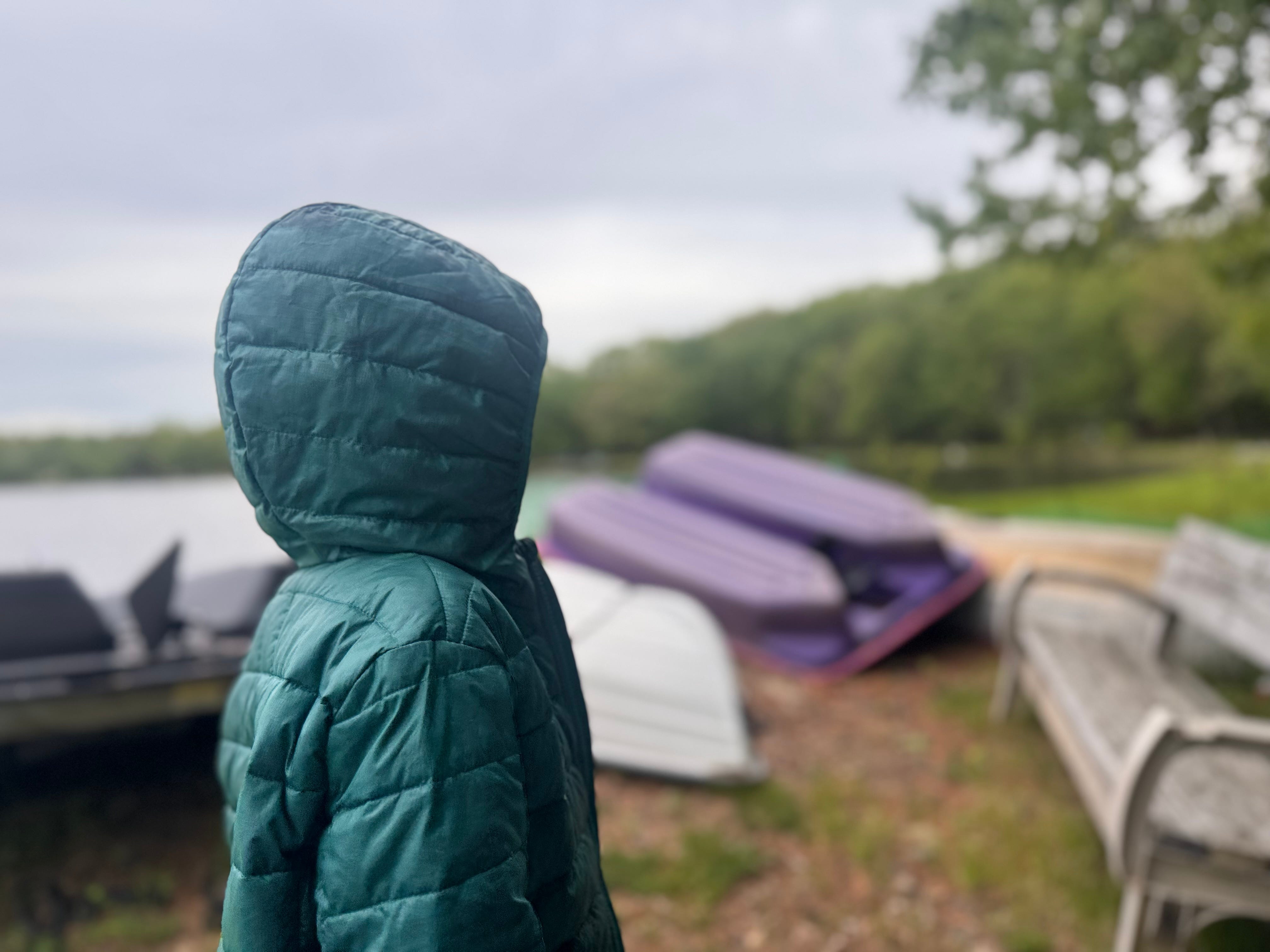
We were supposed to have a bonfire with marshmallows. There was a lake, a pool nearby, boats, a fire pit. We drove almost three and a half hours to get there for Memorial Day weekend (thank you, traffic), and it rained the entire time. Not drizzle. Rained. Freezing, winter-jacket cold. The outdoor plan went to zero the moment we pulled in.
What we had instead was six kids between the ages of 7 and 2.5, one house, a foosball table, and each other. The bonfire never happened. The boats never left the dock. What was supposed to be boating on a lake turned into a drive to a strip mall in the middle of nowhere, Pennsylvania, where my kids ran inside and were absolutely thrilled to just have something to do.
By 7pm, I stopped checking on them. They’d figured out the foosball. They’d invented something on the curling table. They’d set up some version of corn hole I’m not sure anyone else has ever played. And all six of them were just chasing each other around the house, screaming, laughing, in a game that had no rules I could understand and apparently needed none.
I sat on the couch watching them and thought: we did not plan this. And this is the best thing that happened all trip.
Four days, two cities, one plan that kept falling apart
This trip did not look how I thought it would, and that started before we even got to the Poconos.
We flew from Chicago to New York City on Thursday morning, spent the afternoon and evening there with family, and it was already cold. Friday we had lunch in the city, got in the car around noon, and drove up to the Poconos. It was supposed to take under two hours. It took three and a half. We stopped at a Walmart for groceries in the rain and arrived after everyone should have been in bed. My youngest refused to sleep in the pack and play, which he is probably too old for anyway, and none of us slept well.
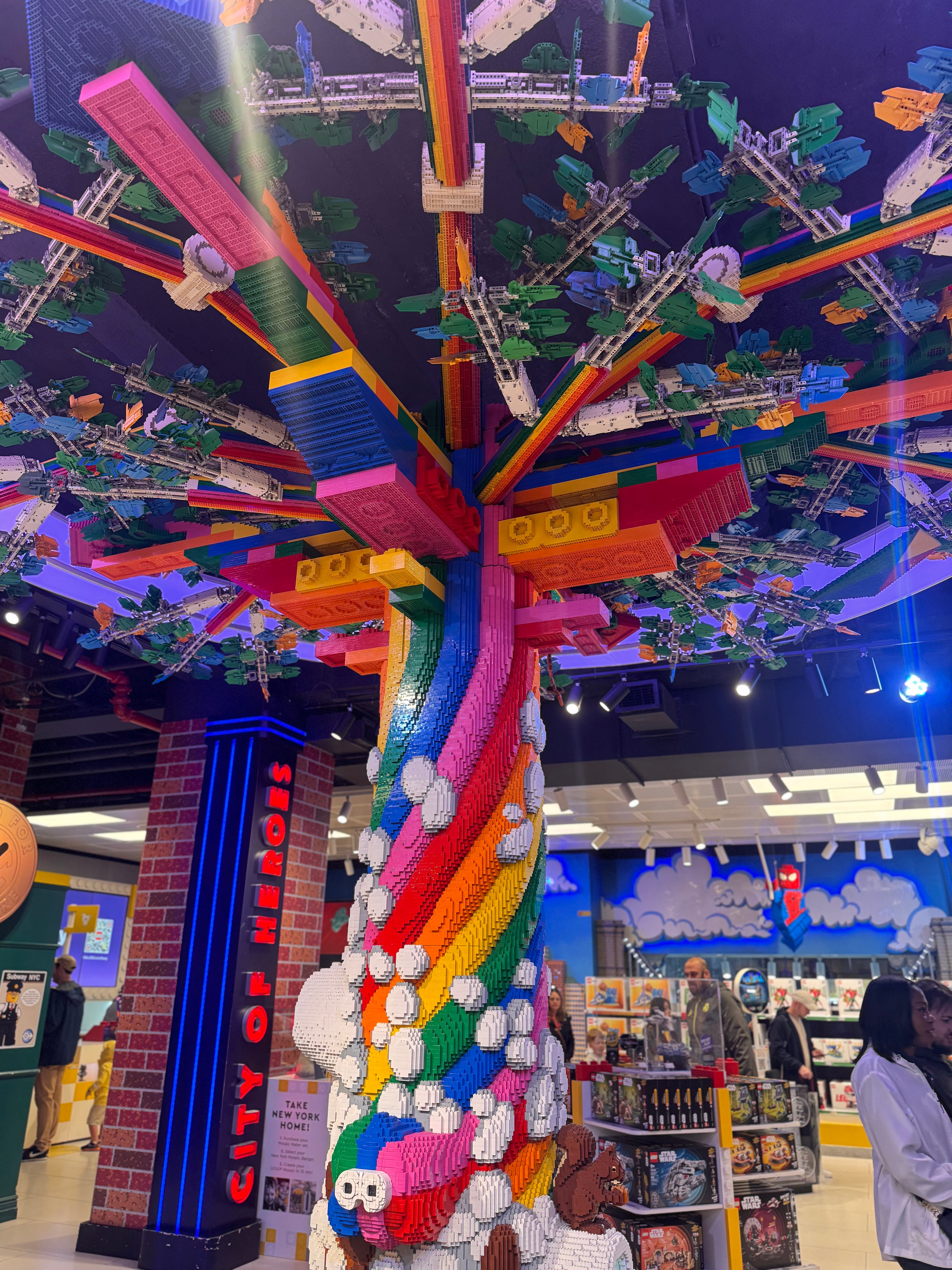
Saturday it rained all day. Sunday morning we woke up early, got back in the car, and drove back to New York City to spend the day with family before flying home Monday morning. That’s when the nosebleed happened, mid-walk to the subway. It was pouring rain. We pivoted to a taxi, rerouted the whole afternoon on the fly, and still made it to the Lego store. By the time we got there we were too done for FAO Schwarz, which had been the plan right next door. My son fell asleep in the cab home. I was running logistics in my head the entire time while everyone else seemed fine, and honestly, I was not fine.
That is the actual trip. Four days, two cities, a round trip between Chicago and New York with a side trip to Pennsylvania, one freezing lake we never used, and a plan that kept falling apart.
And yet.
The skills my kids were building
On the drive home, I made a list in my head. Every moment that went sideways: the boating and bonfire that never happened, the indoor play space detour at a strip mall in Pennsylvania, the wrong terminal, the subway that turned into a taxi in the rain. Those were the moments doing the most work. Because of all the chaos and sideways plans.
AI is a very good assistant. It is a terrible teacher of judgment. Travel is a very good teacher of judgment. One does the planning. The other does the teaching. We need both.
Every parenting newsletter I’ve read in the last two years has some version of the same list: adaptability, critical thinking, creative problem-solving. I have never known what to do with any of it. How do you put “adaptability” on a calendar? Where does it go, between school pickup and weekend soccer?
Here is where it goes. It goes in the moment when six kids are stuck inside a house in the rain and nobody has a plan. Adaptability looked like a foosball bracket that ran until 7pm. Critical thinking looked like reading the room when your nose starts bleeding mid-walk to the subway, knowing you’re not getting underground in a rainstorm, pivoting to a taxi, and making the whole thing a different kind of New York City moment. Creative problem-solving looked like kids who ran out of things to do and invented something new anyway.
There’s research out of Harvard on how resilience actually gets built, and it’s simpler than it sounds. Not by protecting kids from hard moments. By being there with them while they work through one. Mild challenge, a parent in the next room, repeated. That’s it. I got back from this trip and realized: those were exactly the skills I’d been worrying about. I just didn’t recognize them while they were being built.
What I actually used AI for
I used AI to plan a lot of this trip. The predictable parts.
I used it to build the packing list, which took about ten minutes and covered things I would have forgotten. I used it to figure out which hotel to stay at in New York. I used it to think through whether to use our points on this flight and it helped me see that we should save them for a trip we have planned in February instead. And at the airport, I used it to find a faster path through security by going through a different terminal, where the walk to our gate turned out to be shorter than expected.
These are the predictable things. Friction removed. Not interesting.
What AI cannot do is tell you what to do when your kid’s nose starts bleeding on a sidewalk in a rainstorm with a subway entrance two blocks away. It cannot help your 7-year-old read that room and make a call in real time. It cannot make six kids figure out how to entertain themselves in a house in the Poconos when everything they planned for isn’t happening. The unpredictable things, the ones that went completely sideways, those are the ones building exactly what they need.
I’m using AI to make the trips happen. The trips are doing the rest.
Here are two prompts worth saving before your next trip (even a day trip counts!). Use the first before you leave. Use the second when you’re there.
Before you go:
“Plan a [weekend trip / day trip] with kids aged [ages]. Include ONE planned thing that might not go as expected: a backup option if something is closed, a meal that’s a stretch for them, or a 45-minute unstructured block with no plan. I want 2-3 moments of mild uncertainty we navigate together. Don’t make it hard. Make it real.”
When you’re there:
“I want to help my [age]-year-old develop better judgment in real situations. Give me 5 small travel moments — at the airport, in a new city, at a restaurant — where I can pause and let them make the call instead of making it for them. Include what to say when their call is wrong so it becomes a learning moment instead of a frustration.”
The chaotic trip was the right trip
For context: this past March we did spring break in Florida. Rented a condo, easy flight, same place for ten days, close to the beach, full kitchen. Predictable. Calm. No pivots. I probably had more fun, if I’m being honest. It was just easier.
But this trip? Four days, two cities, one freezing lake we never touched, a nosebleed in the rain, three and a half hours in the car with a Walmart stop. Pure chaos. More things went wrong than went right.
And my kids were fine. More than fine. They were adaptable in a way that I, running on less sleep with too much in my head, was honestly not. They adjusted faster than I did. I was the one on this trip who needed to learn something from them.
If your Memorial Day weekend looked like controlled chaos, compare it to your easiest trip. The easy one was probably more fun. But I don’t think it built what this one built.
This week’s dinner-table question:
“If everything we planned on our next trip went wrong, what would you want to do instead?”
Ask it tonight. Listen to the answer. They already know how to think about it.
I’ll see you after carpool.
Danielle