
It's never as bad, or as good, as you think
The people who built AI are the most scared of it. I had to find out why.

No prompt this week. Just the two sides of the AI doomsday fight, what it means for your job and your kids, and where I land. The honest version, scary parts and all.
First, I did the homework
There is a lot of doomsday talk about AI right now, and most of us are just letting it wash over us. I didn’t want to do that. I run Numeriq Advisors, an AI team for companies, so this is basically my world, and even I needed to sit down and actually understand what people mean when they say this could end badly.
So I watched a whole documentary about it, over two afternoons, because I could not get through it in one sitting. It’s called The AI Doc: Or How I Became an Apocaloptimist. The guy making it is about to become a dad, so he sits down with people on both sides of this and asks them one simple question. Are we going to be okay. One side pulls toward we’re building something miraculous. The other says we’re building something we won’t be able to control, the kind of thing that eventually makes the world combust. He never tells you who’s right. He just lets them talk. And about halfway through, sitting in my tiny makeshift closet office (IYKYK), very much not in the dark, I realized I was more than a little scared about the world my kids are going to grow up in.
We’ve been here before
I kept thinking about Y2K. A lot of us millennials remember watching that countdown, half expecting the planes to fall out of the sky and the power grids to go dark the second the clock hit midnight. Apparently about a 20% of Americans stocked up on food and water just in case. Then it hit midnight, and the lights stayed on. We’d worked ourselves up for months over a disaster that never came.
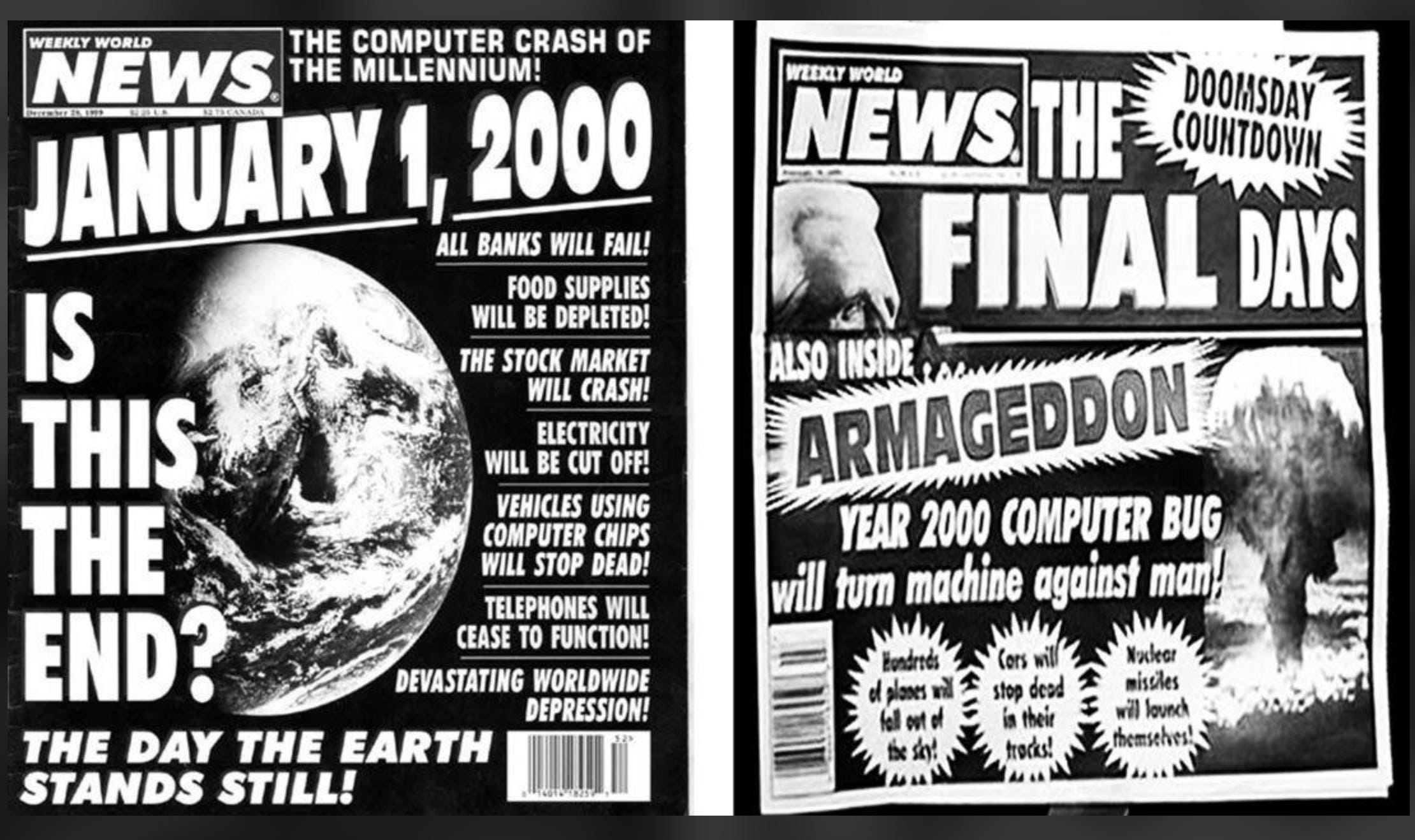
Here’s what I’ve learned from living through a few of these (Y2K, pandemics). You spend the whole time braced for the worst, and then you mostly just have to wait and see how it really plays out.
Except this time the thing we can’t predict isn’t sitting in some lab, it’s already in our houses, in our kids’ hands, changing how we work and where our careers are headed almost every day.
Which is exactly why I’m handing this to you instead of keeping it to myself. This isn’t abstract tech news you can scroll past, it touches your job and the world our kids are walking into. So no clever prompt this week. Just both sides, because I think both are warranted, and some of what I found genuinely surprised me, starting with who turns out to be the most afraid. Let me give you the scary one first.
How this could go really wrong
It kept me up a couple of nights, honestly. A lot of the people who are the most scared are the ones who built this technology. Not people yelling on the internet, the actual engineers and researchers who made the technology. There was even a letter that went around a few months ago, written by an AI founder, basically a warning to the rest of his world that the pace has crossed a line and most people have not noticed yet. It went viral, close to 100 million views across platforms. I sat down and read the whole thing in one sitting, and it was the first time this whole AI thing made me go, uh oh. (It’s worth a read.)
The people most scared of AI? They’re the ones who built it.
The fear, in plain terms, is that once a machine gets smarter than we are, we might not be able to steer it anymore. And because this stuff lives on everyone’s phone now instead of locked away somewhere, there are a lot more hands on it, including people who want to do real harm, which is where all the bioweapon worries come from.
And it is not just talk. A few weeks ago the government actually forced Anthropic, one of the biggest AI companies, to pull its most powerful model, Fable, completely offline, the first time that has ever happened. Fable was actually the safer version, the one that came after another model they were nervous to even release, because they worried there were holes in it and the wrong people might get their hands on it. Here’s where I’ll be honest with you though. I used Fable for about 24 hours before they pulled it, and it was awesome, and I’m a little disappointed it’s gone.
How this could go really right
Now here is the other side of the table, because it’s just as loud, and it’s the part that’s making me sleep a little better at night. They are already using AI to design brand new medicines. Peter Attia, the doctor a lot of us listen to, the one who wrote Outlive, a book I really enjoyed even if half of it was probably over my head, keeps talking about real hope for Parkinson’s in the next ten years. As someone who grew up with a grandfather who passed from it, that one makes me a little hopeful. He says the same about cancer.
Listening to him, I keep thinking, maybe our kids grow up in a world where the diseases that scare us now are just things you treat and move on from. Think about how getting polio was once this enormous, terrifying deal, and now we barely think about polio at all because of the vaccine. We might even get spoiled by it, the same way none of us think twice about antibiotics for strep or the MMR shot. Honestly, I think I might be more excited about all of this than our kids will ever be.
Here is where I have landed
So which side is right. After sitting with both, I landed right where the movie does. I’ve lived through enough of these to know the truth usually sits somewhere in the messy middle. The people sure it’s the end, and the people promising paradise, almost always both miss it.
It's never as bad, or as good, as you think.
What I’d take from it
So what do you actually do with all of that. Three things.
1. Go watch the documentary.
The AI Doc. Understand both sides, watch it for the hour and a half. It’s worth it.
2. Real talk about your career.
We’re already seeing this shift, right. Our parents and grandparents had this loyalty to one company for life, and we already see people moving around way more than that. But I think it’s bigger than just switching jobs more often. The actual way we work might change. You’ve heard me bring up Sinead Bovell before, the futurist. She talks about the end of the career ladder, a world where a lot more of us offer up our skills and work project to project instead of clocking in for one employer.
I’m sort of living that right now. I went from corporate, to tech, to building my own thing, and somewhere in there I stopped feeling like I was climbing a ladder and started feeling more like a solopreneur. The strange part is that I’m building slower than I ever did inside a company, and a lot more on purpose. There’s no one telling me if this is the right move or the next step, so I have to be really intentional, stay focused, and not go chasing every shiny new thing. It doesn’t always look like progress in the old way. But it’s mine, and it’s deliberate, and I wouldn’t trade that back.
So if you’re a little worried about your job, you probably should be, but the move isn’t to panic. It’s the thing Sinead always comes back to. Forget your job title for a second, and get clear on the skills underneath it, the actual thing you’re good at that someone would pay you for no matter where you landed. That is what travels with you when the company, or the whole way we work, changes underneath you. You don’t have to quit anything or start a business. You just want to know what’s yours to carry.
Forget your job title. The thing you're good at is what travels with you.
3. About our kids. Yes, parts of this are scary, the bioweapon stuff is a real concern and I'm not going to pretend it isn't. But they might also grow up with more medicine and more answers than we ever had. And remember, we spent our whole lives sure that nuclear war was going to end us, and it still hasn't.
The scariest version of the story is not the usual outcome.
I closed my laptop after that second afternoon still a little scared, but mostly hopeful, which I think is the only honest place to land. The fact that you’re even reading this means you’re paying attention, and that’s most of the job.
So this week, skip the kids on this one. Bring it to your partner, or a friend, and actually ask them. How do they see AI hitting their life right now, the good and the bad. What are they actually scared of. And what are they hopeful about. Then just listen. I promise you’ll learn something.
I’ll see you after carpool.
Danielle
Came here from Hannah’s interview. I don’t have kids but do own my own business and wonder a lot about what’s next. My wife works for an AI for science startup.
I love the word Apocaloptimist and had a long chat with Gemini about it 😹🤪
Loved The AI Doc - and cried after.