
AI Hands Kids the Answer. Color War Makes Them Earn It.
The durable skills outlast every tech shift, and the four I lean into all summer.

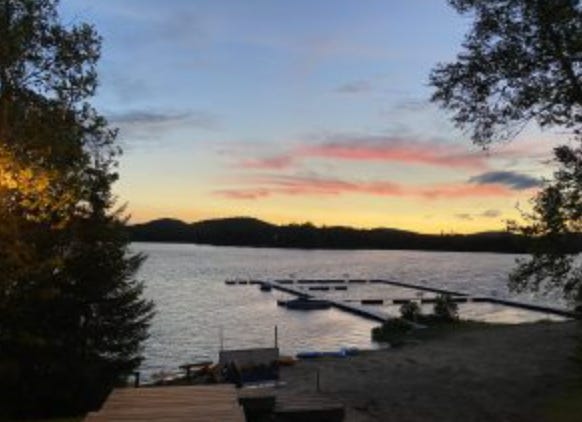
(Waterfront image of the sleep away camp I went to for years)
Color war was the best part of my summer, every single summer. The relay races, the gaga ball and nukem ball tournaments, the camp-wide race where they’d get every last kid out on the field at the same time and the energy was magical. I loved the competition, I loved being on a team, and I really loved the cheering. I was a shy kid in a lot of ways, but color war was the one place that shyness dissipated. I got so into it over the years that I ended up as one of the color war captains later, in high school (yes our school had color war - weird, I know).
Decades later (I’m aging myself here), the feeling of color war is what comes back first, being part of something bigger than me and coming back to enjoy the camp feeling year after year. And it’s what I find myself wanting to give my own kids right now, in a summer where the news and noise around AI tells us the world is changing FAST. I keep reading that if I really cared about the future my kids are walking into, I’d be getting them ready for AI. Coding camp, an AI tutor, the earlier the better. I use these tools all day for work, so believe me, I feel that pressure as much as anyone. But when I look at what I’m giving my kids this summer, it’s camp. Plain, sweaty, sunscreen-in-your-eyes summer camp.
My six-year-old is wrapping up week 7 of 7 of his camp experience. He’s obsessed with the theme days and the camp-wide color war and the gaga ball games, same as I was. The one thing he didn’t love, at least at the start, was swimming (I always hated waterfront - you could find me on the sports field instead). He was in the water five days a week and he made sure I knew how he felt about it most of those days. I didn’t let us make a big deal out of it. The pressure stayed low (but he still had to show up), and he slowly came around. Now he loves swim time. It just took him doing it over and over, badly, before he got there.
The Feeling a Screen Can’t Give Them
Here’s what I keep finding when I think about summer. Almost everything I remember from camp, and everything I’m watching my son pick up right now, is the stuff no screen can give you. Getting along with kids you didn’t choose in your group or bunk. Trying something you’d never sign up for on your own (swim 5x a week being one), in a place safe enough to be bad at it for a while. Feeling like you’re part of something bigger than yourself. We even had a word for that feeling, Ruach, which is Hebrew for spirit, and there’s no version of it that an AI bot or downloadable app can give a kid.
That’s the exact thing I worry AI steals from our kids. When I don’t feel like sitting or wrestling with something hard, I can open Claude and have an answer in a few seconds, and most of the time, I take it. Our kids are growing up with that option built in from day one. That’s not great.
Camp builds the muscle of showing up again when the answer isn’t instant or when the experience is uncomfortable. AI is the thing that lets us stop building those skills.
What I really want to know, underneath all the noise in the news and on my feeds, is whether I’m giving my kids the experiences and skills that matter most to ME. A sense of community. Being a good person who does good things for people, not just talks about it. A love of learning, and even more than that, a love of asking questions. I grew up in a house full of questioning, and I would hate to give that up and have a generation of kids who got great at getting answers and never had to work at a hard one long enough to figure it out on their own.
I can’t tell you which jobs will be around when my kids are grown, or what any of these tools will look like by then. Heck, I’m not sure we have any clue what that will look like five years from now. What I do know is that they’ll need to get along with people they didn’t pick, stick with something hard, and figure things out when nobody’s just giving them the answer right away. Camp has always built exactly those skills, and as long as we keep it tech free, it always will. That ability to slow down and stay analog while the technology keeps moving at warp speed ahead is priceless.
What Happens When You Take the AI Away
Last year a group of researchers in Turkey (Bastani and his co-authors) gave about a thousand high schoolers GPT-4 to practice math with. While they had it, they did great, close to 48% better than the kids without it. Then the researchers took it away for the real test, and those same kids scored worse than the ones who never used it at all, by around 17% (zero shocker given how I feel after using AI too much). That kind of false confidence, riding high while the AI is there and crashing the second it’s gone, is exactly what scares me.
The one exception was a version that only gave hints instead of full answers, and those kids kept their gains. They put out a correction later, so I don’t want to lean too hard on the exact numbers, but the basic shape of the study matters. The help that feels best in the moment can be the help that leaves you with the least. Which I think resonates with how a lot of us feel with the constant tug of “how much do we help our kids before it’s too much.” It’s finding that balance of building resilience but being supportive.
The help that feels best in the moment can be the help that leaves you with the least.
None of this makes AI the villain, by the way. The hint-only version worked fine, which makes sense. A tool with a little friction built into it can really help, and I see that for myself when using it for work. A tool that does every single step for you takes something with it along the way.
Camp has its own proof, for what it’s worth. In one study, Uhls and her colleagues sent a group of kids to a screen-free camp for five days, and afterward they were noticeably better at reading emotions on other people’s faces than a matched group who stayed home with their devices. Five days. That was all it took. Which tracks, because I always said the best place to learn EQ is at sleepaway camp.
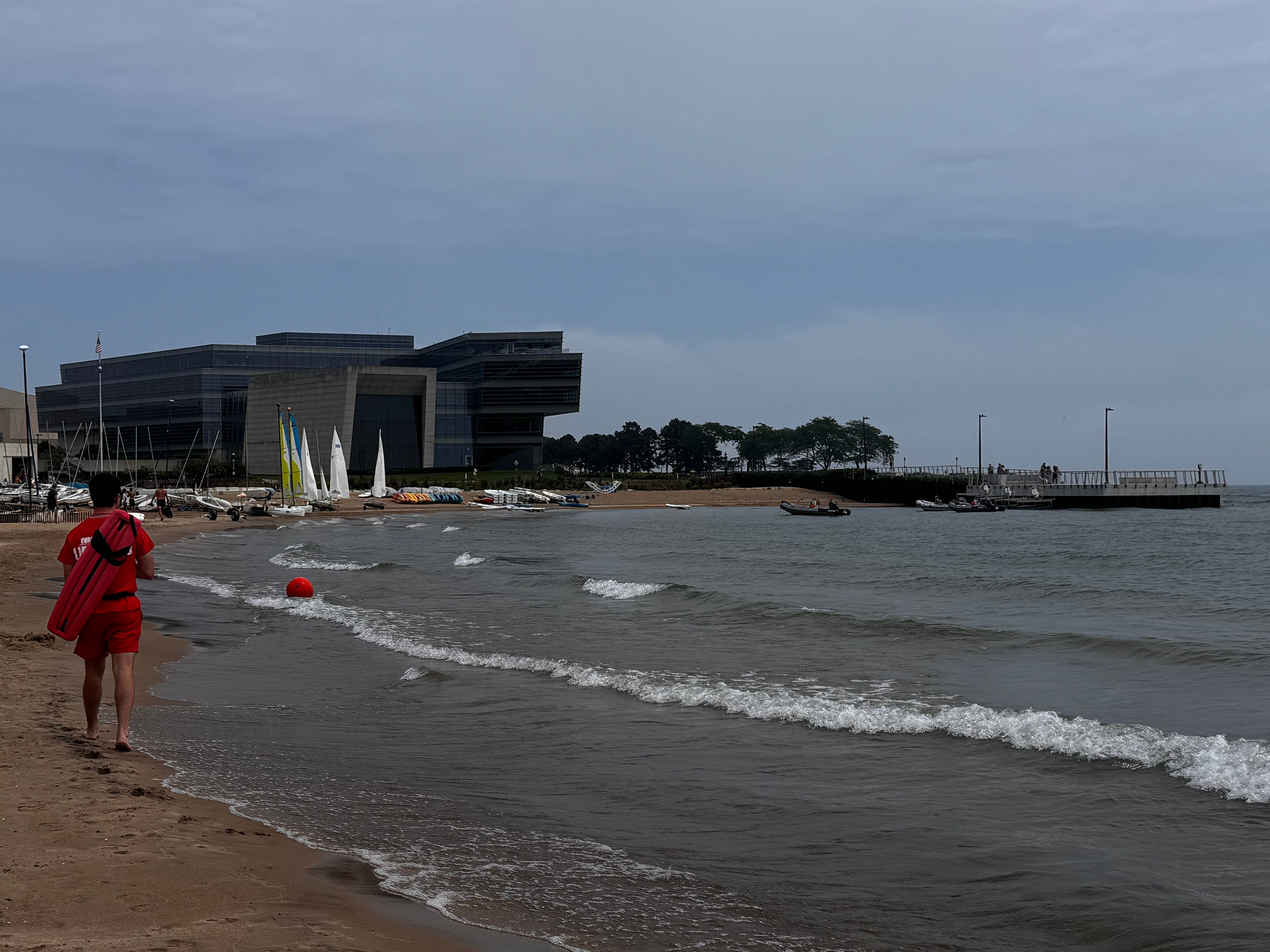
(Our summer tradition of spending weekends at the beach when schedule allows, hands down the best part of Chicago living).
About That AI School I Was So Into
A while back I wrote to you about the new AI schools, the kind where software runs the day and there’s no teacher at the front of the room. I was into it. I’m walking that back a little now, if I’m honest. The more I use these tools for real work, the more I see how fast this is all moving and how much we still don’t really know.
And when you look closely at the most talked-about of these schools, a few things stand out. The “AI” doing the teaching is mostly adaptive practice software, closer to Khan Academy than to ChatGPT. Tuition runs anywhere from forty to seventy-five thousand dollars a year depending on the city (Chicago is sitting at $55K a year, where I live). And the super impressive results they advertise (which, I’ll be honest, got me excited in the first place) haven’t been checked by anyone on the outside. I’m all for fact checking, and there isn’t really a control group here, so I’m back in wary-but-watching mode. Victor Lee, who studies this at Stanford, calls it an effective model with real limitations, and makes the point that a private school at that price is largely teaching kids who were already going to test well (that opens a whole other can of worms I’m not going to dig into today).
A real school still matters, and I’m guessing that’s because resilience, EQ, and emotional discomfort get “experienced” in that environment. The schools of the future don’t have to be AI schools per se. But what IS top of mind for me, what I care about, is how we get the good technology into the schools we already have, so every kid gets it (mine included). And not leave it just for the kids whose families can pay these wild prices.
The Four Things I Lean On All Summer
So no, I’m not running some off-grid, no-technology summer over here. And I’m not going the other extreme and plopping my kid into some crazy expensive AI-driven school.
I do know my kids will use AI in ways we can’t imagine right now. But here are the ways I’m taking the lessons from summer and building them into our school year, so they’re prepared for the future of work and life, whichever way it plays out:
The director. I let AI run the planning and the logistics (with tight control on safety) so we can live life more fully. That’s the routine follow-ups, scheduling, activity planning, and lunch ordering (hopefully more than just a cookie - IYKYK). But mostly, having it find the really fun activities that aren’t on my radar and fit into our days (think my summer bucket list artifact).
Friday night dinners. This is the one thing none of the technology touches. It’s what I grew up with, the whole family around the table, same night every week. It was always tech free by default. It’s something I’m trying to keep even when I’m too tired to plan and cook, because this tradition really rooted me in who I am and gave me quiet, intentional time with my parents, siblings, and our family friends.
Removing things. Before I sign us up for one more enriching activity, I try to take something off the calendar first. So much of the good stuff at camp happens in the boring, unstructured in-between, and it’s the same at home. I add a lot less than I used to, and I’m very conscious of not over-planning.
One waterfront a “season.” There’s always one tradition I hold onto even when the kids say they don’t want to. This season it was the water, weekly swim lessons (on top of camp swim) and the ritual of going to the beach (it’s a 6-minute drive from us, probably the only great thing about Chicago). They were not into swim back in June. I kept it on the calendar anyway, and now it’s turned into something they look forward to each week. My goal is to find this equivalent in every season.
Where I’d Start
If you take one thing from all of this (which, I’ll admit, feels more like a nostalgic post, because that’s the mood I’m in), I’d make it the Friday night dinner, or honestly any night of the week that works. It’s the easiest one to start and the hardest one to regret. Put it on the calendar, phones by the door, and then, once everyone’s there, ask the kids what they love about camp, or about color war, and how you might carry some of that summer feeling with you through the rest of the year. Then just listen. You’ll learn more about who they’re becoming through that quiet weekly dinner ritual. Feels kind of 70’s/80’s era, but it’s awesome.
What I want for my kids, more than any head start, is for them to have a color war of their own. Some team, some week, some thing they cheer their hearts out over and keep coming back to year after year, long after they’ve forgotten whatever was on a screen that summer.
I can want real guardrails around what these AI tools do to my kids and still want them ready for a deeply technical world. There’s a place for both. The way I get them there is by protecting the low-tech, hands-on stuff that builds the steadiness to handle whatever comes. So I’m sending mine to camp. I’m not worried they’ll fall behind for spending July on a field instead of in front of a screen learning to code. If anything, they’re getting the skills that will carry them into whatever this world becomes.
And the fact that you’re even asking whether you’re doing right by them, in a summer when everyone is telling you to prep them for a future none of us can really picture, tells me you’re paying attention.
I’ll see you after carpool.
Danielle
So timely, my son’s color wars is tomorrow!